
Morgan County Probate in Superior Courts
Morgan County does not have a separate public office called Morgan County Probate Court. The official court structure assigns probate jurisdiction inside the Morgan Superior Courts. Superior Court 1 has one-half of estates and probate, one-half of adoptions, mental health, and tax sales. Superior Court 2 has the other one-half of estates and probate and one-half of adoptions. That split is the key local fact for probate record users.
Probate records can include regular estate filings, small estate affidavits, estate claims, wills filed in an estate, appointments of personal representatives, guardianship reports, and court orders. Some related matters, such as adoption and mental-health proceedings, are restricted even when the same Superior Court division handles them. Public probate case data may appear in MyCase, while copies and older files are handled through the Morgan County Court and Marriage Records division.
The Morgan County Estates topic gives the local small-estate rules and forms.
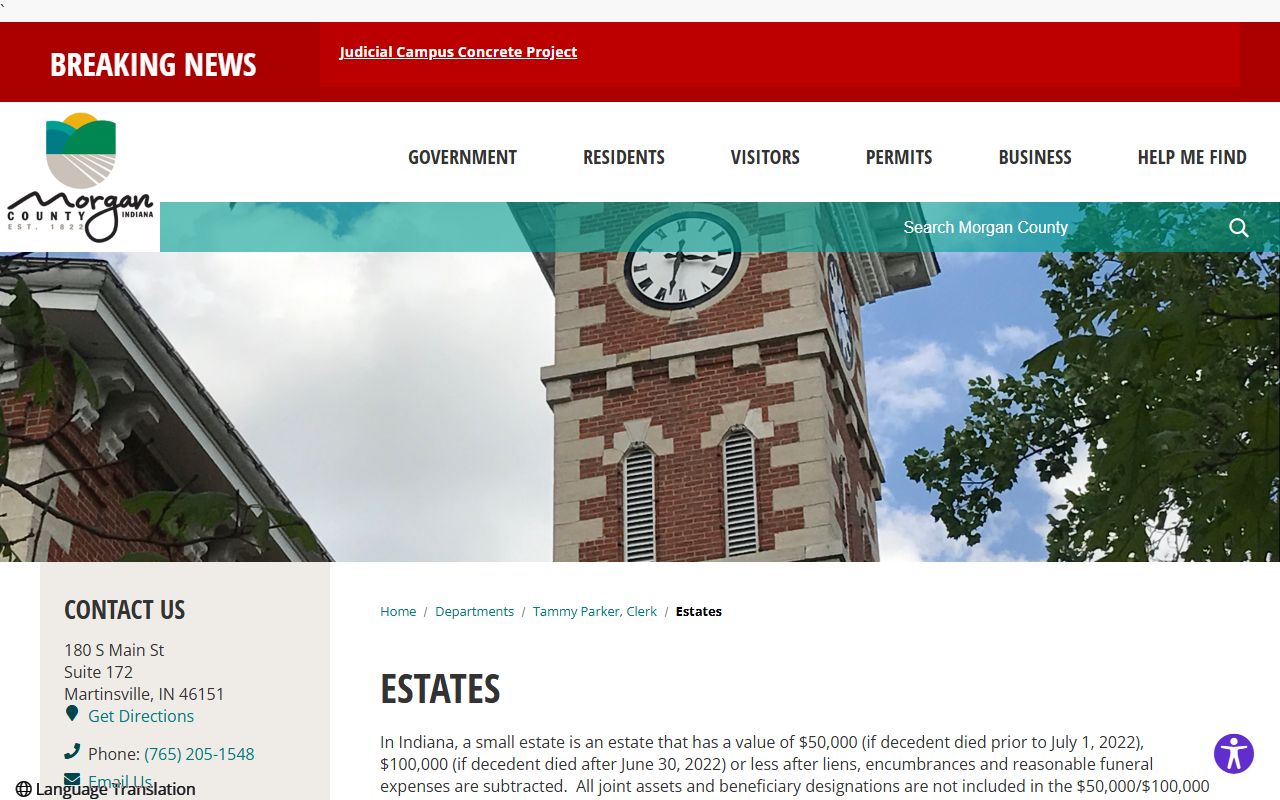
That county source controls the local small-estate thresholds, 45-day timing rule, and attorney-filed regular estate instruction.
Morgan County Probate Terms
Probate files use terms that are easy to mix up. These definitions are plain-language aids for reading Morgan County probate records and estate forms. A court order or attorney advice controls the legal effect of any specific filing.
- Testator
- A person who made a will before death.
- Executor
- A person named in a will to carry out the estate duties after court authority is granted.
- Intestate
- Dying without a valid will, which means state succession rules may control distribution.
- Guardianship
- A court case giving a person authority to care for a minor or an incapacitated adult.
- Conservatorship
- A protective financial management role. Indiana filings more often use guardianship terms, so check the actual court form.
Morgan County Small Estate Rules
The Morgan County Estates page gives two threshold amounts. If the person died before July 1, 2022, a small estate is an estate valued at $50,000 or less. If the person died after June 30, 2022, the threshold is $100,000 or less. The amount is calculated after liens, encumbrances, and reasonable funeral expenses are subtracted. Joint assets and assets with beneficiary designations, such as life insurance or joint accounts, are not included in that estate amount.
A small estate also has a timing rule. The county says 45 days must pass after the person's death, and the filer must have the death certificate. If the estate is above the applicable threshold, the county says a regular estate must be filed by an attorney. That local instruction is important because a person may find an estate case in MyCase but still need the right county form or an attorney-filed estate to move forward.
| Small estate issue | Morgan County rule | Source use |
|---|---|---|
| Death before July 1, 2022 | $50,000 or less | Threshold for small estate |
| Death after June 30, 2022 | $100,000 or less | Current threshold in county topic |
| Waiting period | 45 days after death | Required before filing small estate |
| Death certificate | Required by county page | Needed before small-estate filing |
| Larger estate | Attorney-filed regular estate | County instruction |
Search Morgan County Probate Records
Public probate case searching starts with Indiana MyCase. Search by party name or cause number, then use category and county filters when available. Probate records may be under the probate category, but related family, adoption, guardianship, or mental-health issues may be limited or hidden by access rules. If the public search does not show the record, use the Clerk's Records Department for the copy request path.
- Search MyCase by the decedent, estate, guardian, or party name.
- Limit results to Morgan County when the statewide search returns too many matches.
- Open the public case summary and note the cause number, court, status, and filing date.
- Contact the Court and Marriage Records division for copies, certified copies, or older records.
- Use the county Small Estate Affidavit or Guardian Report forms only when the case type fits the county instructions.
Note: Adoption and mental-health records can be restricted even when the assigned court also handles public estate cases.
Morgan County Probate Courts
The two probate divisions share the same Morgan County Judicial Campus address. Use the court assignment shown in MyCase or on the filing. For copy requests, the Records Department is usually the practical point of contact. For pending case questions, use the assigned court phone.
Morgan Superior Court 1
Probate jurisdiction: one-half estates and probate, one-half adoptions, mental health, tax sales
180 S Main St
Martinsville, IN 46151
(765) 205-1492
Morgan Superior Court 2
Probate jurisdiction: one-half estates and probate, one-half adoptions
180 S Main St
Martinsville, IN 46151
(765) 205-1521
Morgan County Probate Forms
The official source inventory identifies a Small Estate Affidavit, an Estate Claim Form link from the Estates page, and Guardian Report forms in the court forms archive. The failed manifest PDF rows should be treated as source links, not images. Use the PDF itself for the current form text because scanned forms and official forms can change.
| Form or record item | Use | Access point |
|---|---|---|
| Small Estate Affidavit | Qualifying small estate after the 45-day wait | County PDF |
| Guardian Report to the Court | Guardianship reporting | County PDF |
| Guardian Report | Court guardian report form | County PDF |
| Records Request Form | Copies of probate case files | County PDF |
Morgan County Probate Filing Fees
The research found the official Morgan County filing-fee PDF, but exact probate fee lines were not machine-readable in this environment. The build therefore should not invent probate filing fees, certified-copy fees, or letters fees. The confirmed cost data for probate is the small-estate threshold, not a court filing amount. Check the filing fee PDF or call the Clerk before filing.
| Item | Published amount or status |
|---|---|
| Small estate threshold, death before July 1, 2022 | $50,000 or less |
| Small estate threshold, death after June 30, 2022 | $100,000 or less |
| Probate filing fees | Use official filing fee PDF or call Clerk |
| Certified probate copies | Confirm with Court and Marriage Records |
The Indiana small-estate affidavit chapter is one of the official legal sources captured for Morgan County probate records.
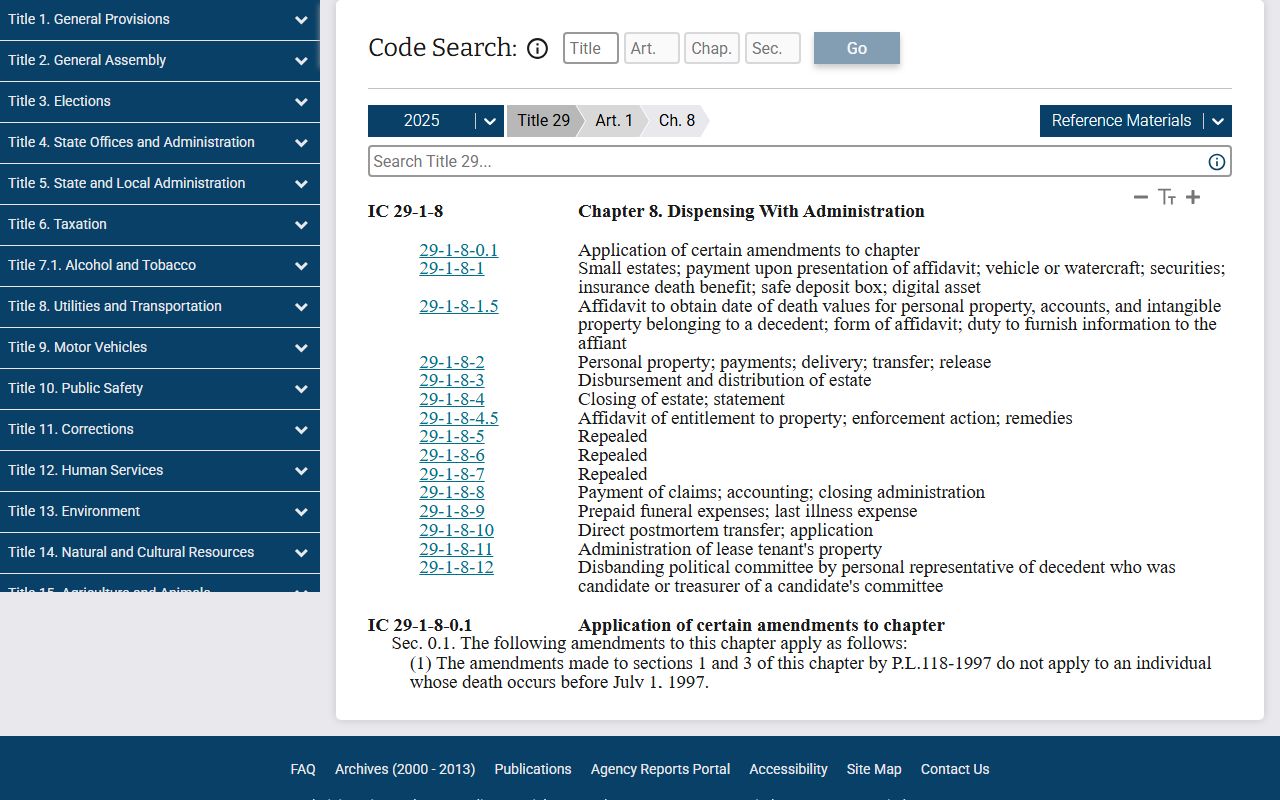
State law gives the small-estate framework, while the Morgan County Estates topic adds the local filing direction and threshold explanation.
What Morgan County Probate Records Show
A public estate case may show the case number, filing date, assigned Superior Court, case status, parties, appearances, estate filings, orders, claims, and docket events. A small-estate filing focuses on the decedent, date of death, death certificate, estate value, debts or liens, and whether the estate fits the threshold. Guardianship records may include reports, orders, and appointment information, but access may be limited when a minor or protected adult is involved.
| Field or item | Type | Notes |
|---|---|---|
| Decedent name | Text | Needed for estate search or filing |
| Date of death | Date | Controls threshold and 45-day timing |
| Death certificate | Document | County says required for small estate |
| Estate value | Numeric | Measured after allowed deductions |
| Court or cause number | Case identifier | Use MyCase or Clerk records staff |
The specific Indiana small-estate affidavit section was also captured in the image manifest.
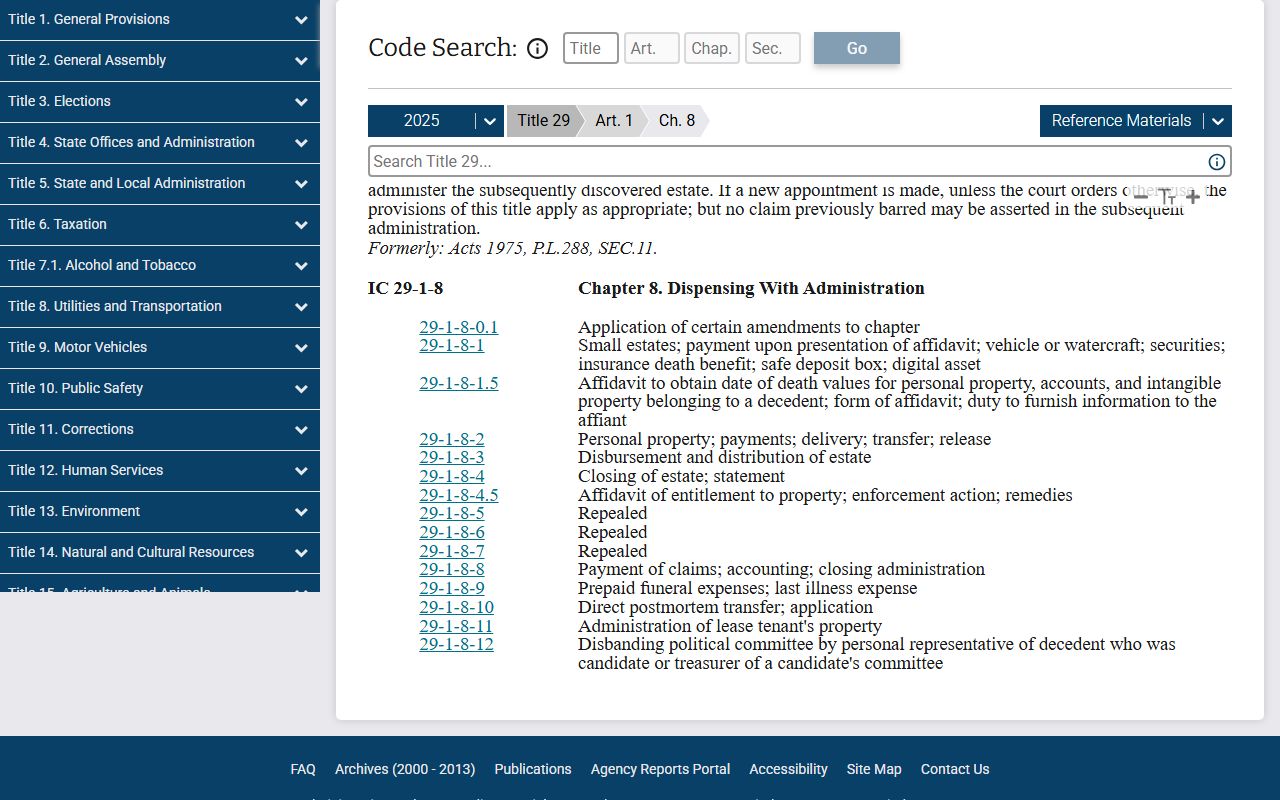
That source supports the distinction between a small-estate affidavit route and a regular estate case.
Restricted Morgan County Probate Records
Not every probate-related file is open. Adoption records are restricted, and Morgan County splits adoption jurisdiction between Superior Court 1 and Superior Court 2. Mental-health proceedings are also restricted, even though Superior Court 1 has mental-health jurisdiction and the county has a Mental Health Court program. Guardianship files can include protected health, financial, and minor information, so public access may be narrower than the case caption suggests.
For public estate copies, use the Records Department. For sealed, confidential, adoption, mental-health, or protected guardianship information, access may require party status, attorney status, agency authority, or a court order. A public MyCase result that looks incomplete may reflect those access rules rather than a missing case.